Rising magnificently from the European shore of the Bosphorus, Dolmabahce Palace stands as the most extravagant architectural statement the Ottoman Empire ever made. Behind its 600-meter marble facade lies a story of imperial ambition, cultural transformation, and the twilight of a dynasty that once ruled half the known world.
The very name Dolmabahce tells the story of the ground it stands on — in Turkish, it translates literally to 'filled garden.' Before the palace ever existed, this stretch of the Bosphorus shoreline was a shallow bay used by Ottoman sultans as a private mooring for their imperial fleet as early as the 17th century. Sultan Ahmed I first enclosed the area in the early 1600s, gradually filling in the bay to create waterfront gardens and a small imperial pavilion. For generations, this sheltered cove served as a relaxed royal retreat, far removed from the formal grandeur of Topkapi Palace on the city's historic peninsula.
By the mid-19th century, the modest waterfront gardens had become entirely insufficient for the ambitions of a modernizing empire. Sultan Abdulmecid I, who ascended to the Ottoman throne in 1839, was deeply influenced by European court culture and determined to signal his empire's cosmopolitan sophistication to the world. He commissioned a palace that would rival Versailles in scale and Buckingham Palace in prestige. Construction began in 1843 under the direction of Armenian-Ottoman architects Nikoğos Balyan and his father Karabet Balyan, and after nine years of extraordinary labor, the palace was completed and inaugurated in 1856.
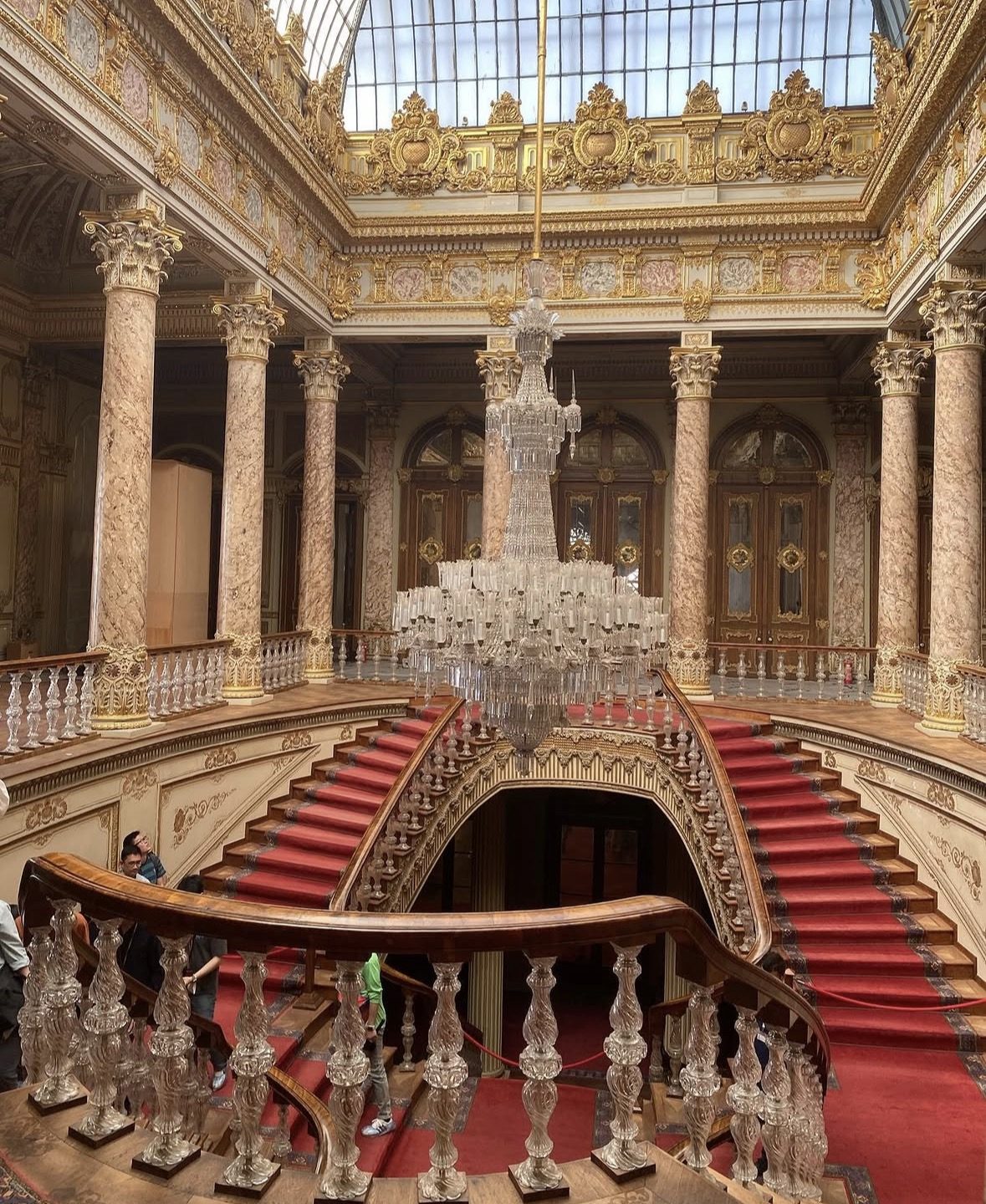
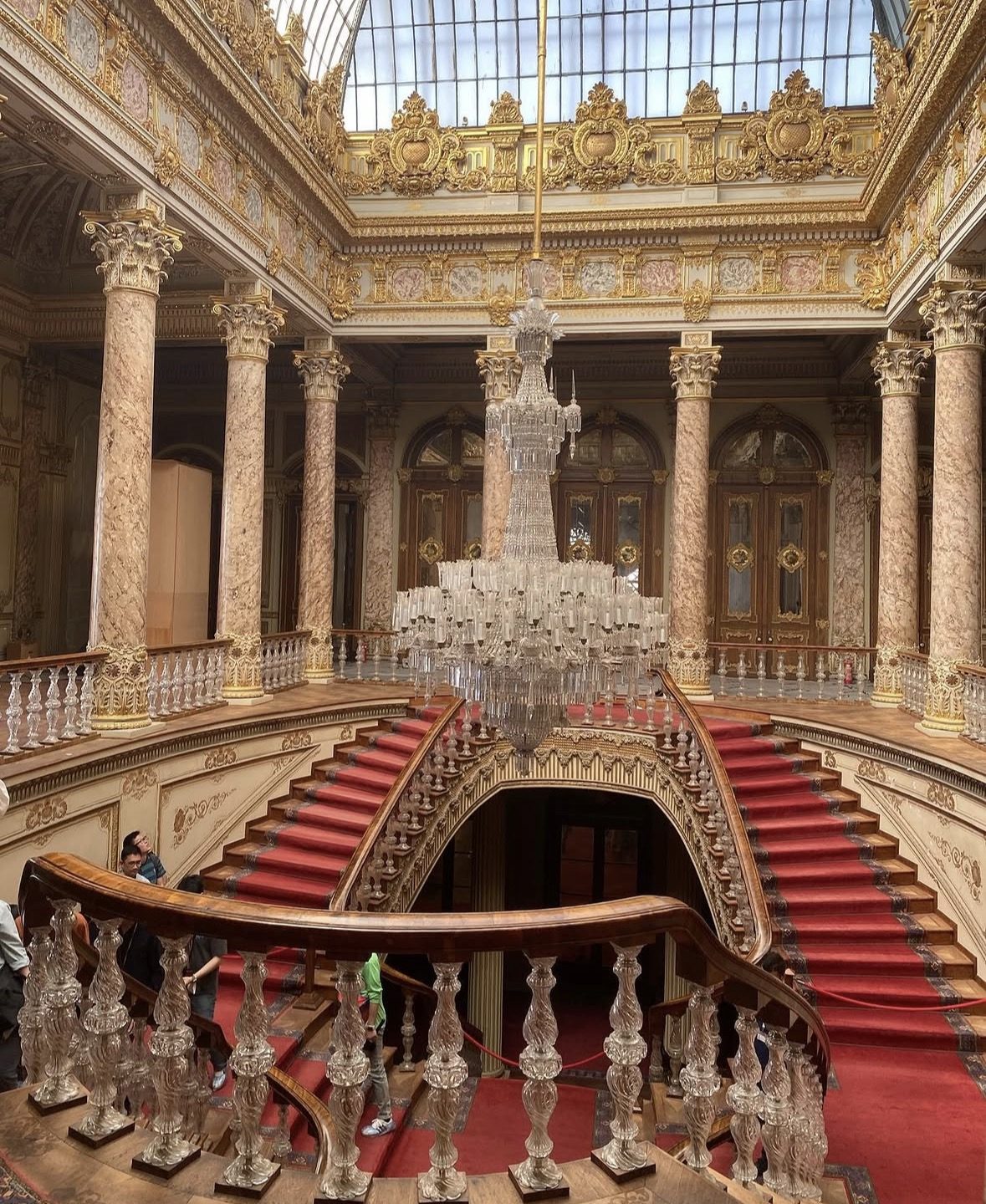
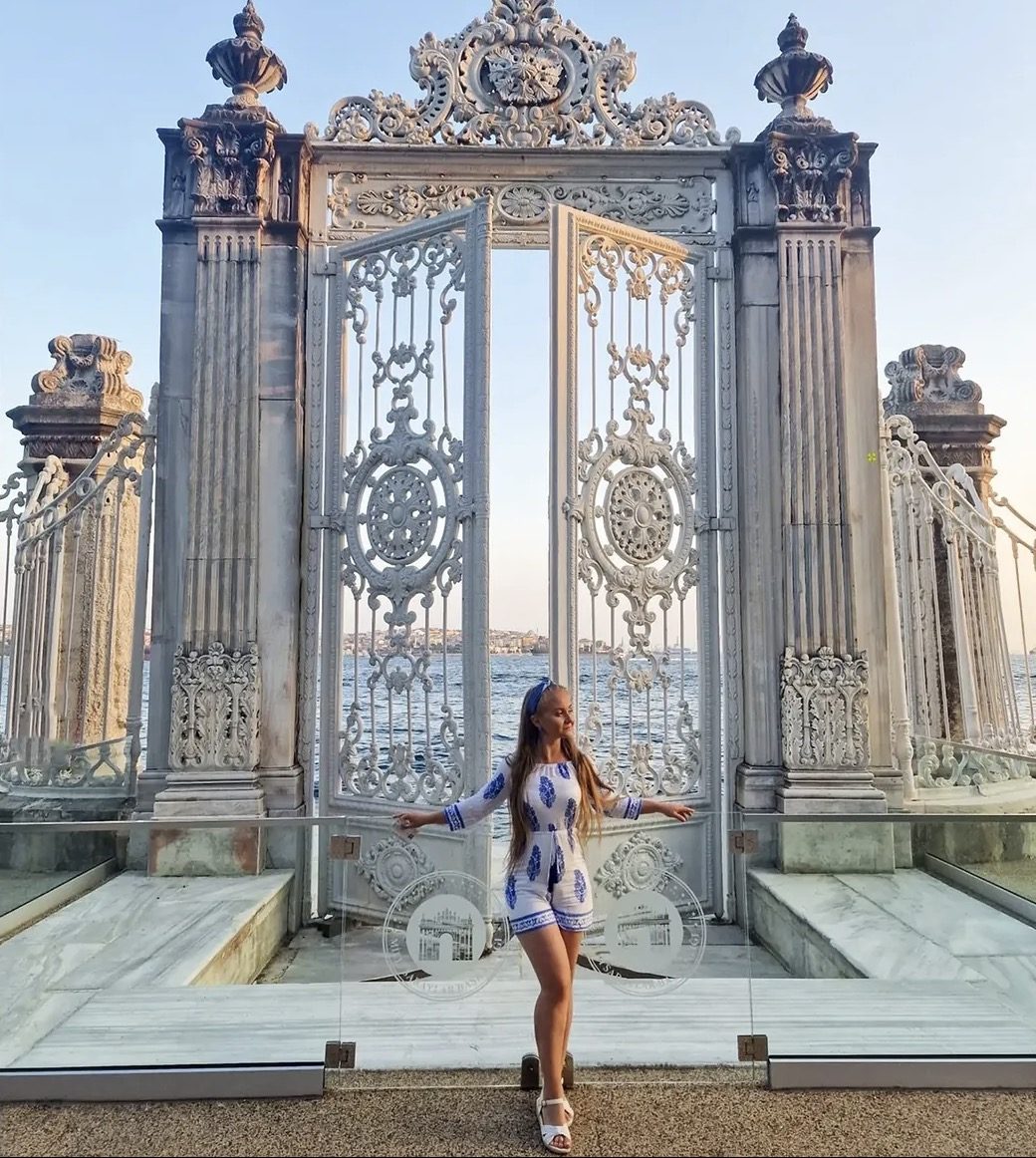
Dolmabahce's architecture is a deliberate and dazzling collision of Eastern tradition and Western grandeur. The Balyan architects blended Baroque, Neoclassical, and Rococo styles with Ottoman decorative sensibilities to create something entirely unique. The palace's 600-meter-long marble facade stretches along the Bosphorus waterfront and is punctuated by towering ceremonial gates, ornate balustrades, and arched windows that flood its 285 rooms with natural light. The building is organized around two principal sections — the Selamlik, or ceremonial quarters, and the Harem, the private imperial residence — connected by the breathtaking Crystal Staircase with its Baccarat crystal balustrades and bronze newel posts.
The interiors of Dolmabahce represent perhaps the most concentrated accumulation of luxury ever assembled under one roof in the Ottoman world. Sultan Abdulmecid spent the equivalent of 35 tonnes of gold on the palace's construction and furnishing — a staggering sum that strained the imperial treasury significantly. The ceremonial hall, known as the Muayede Salon, is crowned by a 36-tonne Bohemian crystal chandelier, the largest in the world at the time of installation and still among the largest ever made. The palace contains 14 tonnes of gold leaf applied to ceilings throughout its rooms, 131 handwoven Hereke silk carpets, and 156 individually crafted crystal chandeliers.
Beyond its sheer opulence, Dolmabahce was a palace engineered for a new era. It was among the first buildings in Istanbul to be fitted with gas lighting, and later with electric lighting during the reign of Sultan Abdulhamid II. European royal families, heads of state, and foreign dignitaries were received in its gilded halls, projecting an image of Ottoman modernity to a skeptical world. Gifts from international rulers fill its galleries — a vast painting of a bear hunt presented by Tsar Nicholas I of Russia, clocks from Queen Victoria, and porcelain from the courts of France and Austria all speak to the palace's role as a diplomatic stage for the empire's final century.
Dolmabahce served as the primary administrative residence for six sultans following its inauguration in 1856, replacing the centuries-old Topkapi Palace as the true seat of Ottoman power. It witnessed some of the most turbulent decades in imperial history — the Tanzimat reform era, the Russo-Turkish Wars, and the slow, agonizing dissolution of an empire that had endured for six centuries. Sultan Abdulaziz signed constitutional reforms within its walls, and the palace's salons buzzed with the desperate diplomacy of a dynasty fighting for survival. By the time of the First World War, the Ottoman Empire was irrevocably declining, and Dolmabahce itself fell silent as sultans retreated to other residences.
The palace's most historically resonant chapter came not during the Ottoman era but in the early years of the Turkish Republic. Mustafa Kemal Atatürk, founder and first president of modern Turkey, used Dolmabahce as his Istanbul residence during the 1930s. His presence in the palace symbolized a remarkable continuity — a republican leader occupying the most extravagant symbol of imperial excess. On 10 November 1938, at precisely 9:05 in the morning, Atatürk died in the palace's Harem section. In a profound act of national mourning, all clocks in the palace were stopped at that exact moment, and to this day they remain set to 9:05 as a permanent, silent memorial to Turkey's founding father.
Following Atatürk's death, Dolmabahce was transferred to state ownership and eventually opened to the public as a museum in 1952. The Turkish government invested significantly in its preservation throughout the latter half of the 20th century, recognizing the palace not merely as an architectural treasure but as a repository of national memory. Restoration projects in the 1980s and 1990s addressed decades of deferred maintenance, stabilizing the structure and conserving its extraordinary collection of European and Ottoman decorative arts. Today the palace is administered by the National Palaces Administration, a body under the Grand National Assembly of Turkey responsible for all former imperial properties.
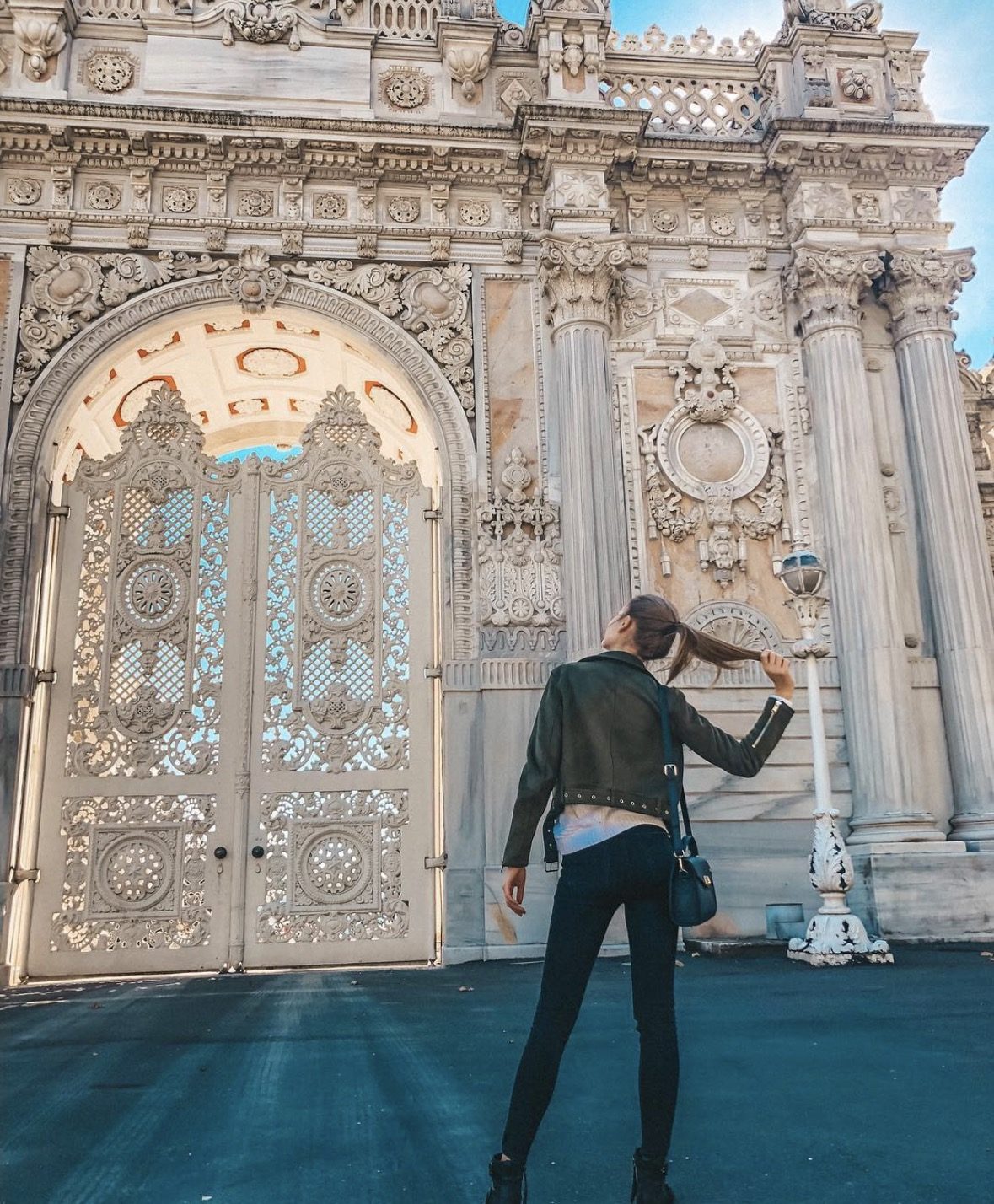
Visiting Dolmabahce Palace today is an experience that defies easy description. Guided tours lead visitors through the Selamlik ceremonial quarters and the intimate Harem apartments, each room a tableau of extraordinary craftsmanship frozen in the mid-19th century. Standout moments include standing beneath the magnificent Muayede chandelier in the 2,000-square-metre ceremonial hall, walking the Crystal Staircase, and pausing before the stopped clocks in Atatürk's bedroom — a moment that never fails to move visitors regardless of their nationality. The palace's Clock Museum and the Naif Art Gallery, housed in annexe buildings, add further depth to any visit.
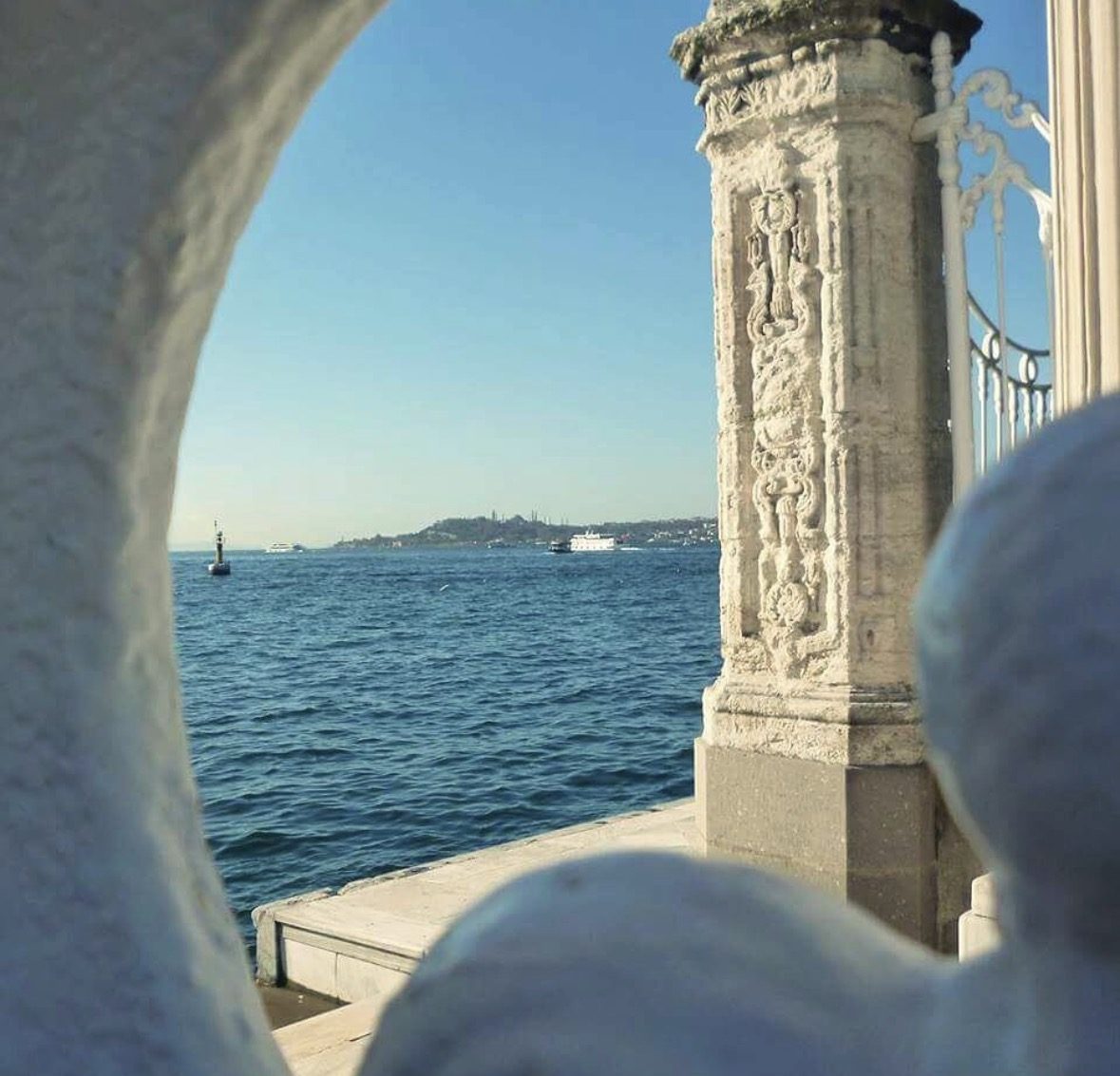
The palace's setting on the Bosphorus remains as dramatic today as it was when Abdulmecid I first unveiled it to a stunned Istanbul. The waterfront esplanade offers some of the finest views in the city, framing Asia across the strait and the graceful arcs of the Bosphorus bridges above. Whether you approach by ferry — the most atmospheric option — or on foot from Besiktas, the moment the marble facade comes into full view is genuinely unforgettable. A visit to Dolmabahce is not simply a museum trip; it is an immersion into the grandeur, contradiction, and pathos of an empire that shaped the modern world. Come and experience it for yourself.
Ready to Experience It Yourself?
Skip the queues and make the most of every gilded room with a guided tour that brings Dolmabahce's extraordinary history to life. Expert local guides reveal stories no guidebook captures, from the diplomatic intrigues of the sultans to the solemn morning Atatürk took his last breath. Browse our handpicked selection of tours and secure your place at one of the world's most magnificent palaces.
Book Your Tour Now